The accepted dimensional tolerance for the same batch of tiles can vary by several millimeters, even after firing at high temperatures. However, a difference of less than a millimeter can be enough to change the final appearance of a floor or wall. Some regulations require wider joints depending on the manufacturing process, while the current trend favors the cleanest finishes. Between technical requirements and aesthetic expectations, the choice is less obvious than it seems.
Rectified or non-rectified tiles: understanding the essential differences
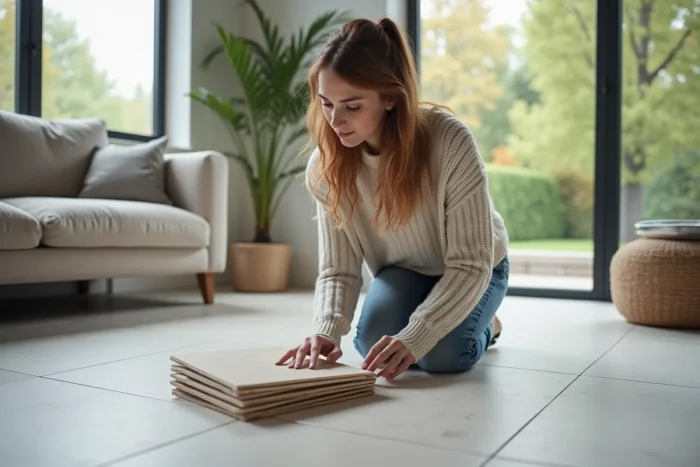
In the world of tiling, there is no innocuous alternative between rectified and non-rectified versions. Rectified tiles stand out for their precision: after firing, each tile is re-cut to display perfectly straight edges, without a hint of defect. This meticulous work allows for narrower thin joints, around 2 mm, and achieves that uniform, fluid effect that embodies modernity and elegance.
Non-rectified tiles, on the other hand, retain the marks of their creation. The edges are sometimes rounded, irregular, with each piece asserting its small uniqueness. This automatically requires wider joints, between 4 and 6 mm, to compensate for format variations. The result: a more traditional, warm, even rustic appearance in certain collections.
So, it’s not just a question of look but also of installation logic and expectations over time. Those who aim for pure lines find satisfaction with rectification. Others prefer the authenticity and texture of a non-rectified tile. Added to this are other parameters: material quality, type of ceramic stoneware, ease of installation… To delve into each technical or aesthetic aspect and better guide your approach, simply discover Your Deco in detail.
What criteria should be prioritized for a harmonious and functional interior?
The choice of tiles is not improvised, as it must meet both the intended use and the desired style. In the most used rooms, such as entryways, kitchens, and hallways, opting for glazed ceramic tiles limits unpleasant surprises: shock resistance, ease of cleaning, proven durability. Bathrooms require a non-slip surface capable of withstanding daily humidity.
Aesthetic impact remains central. Wood-look tiles combine the elegance of wood with the robustness of tiles; in their rectified version, the illusion of an almost continuous floor appeals to many fans of contemporary atmospheres. Conversely, non-rectified tiles naturally integrate into a more classic decor, where the presence of joints visually structures the space.
The format of the tiles directly influences the sense of space. To help you visualize the concrete effects:
- Large rectified tiles amplify volumes and lighten the decor.
- Small non-rectified tiles create mosaic effects and sometimes accentuate the graphic character of a room.
The type of joint also weighs in: reduced joints ensure visual unity, while wider joints rhythm the surfaces and highlight the contours.
Additionally, there are a few practical elements to consider:
- Compatibility of the covering with underfloor heating,
- Ease of installation depending on the flatness of the substrate,
- Availability of matching skirting boards or decorations for a flawless finish.
Taking the time for this overview ensures a coherent, lasting result that will withstand the test of daily life.
Aesthetics, maintenance, budget: what type of tile truly meets your needs?
The first impact often plays out to the naked eye. Rectified tiles, with their sharp edges and thin joints, create an effect of almost uninterrupted flatness. Ideal for those who want a floor without demarcation, where light flows seamlessly. In contrast, non-rectified tiles embrace the irregularity of their edges and play with texture. Here, the wider joint becomes a design element, adding rhythm to the composition.
Maintenance varies according to the finish. Fewer joints mean fewer gaps for dust or dirt, which is one of the advantages of rectified tiles in living areas. The wider the joints, the more vigilance is required, especially in high-traffic areas or those exposed to water and grease.
On the budget side, rectification comes with an additional cost. This extra operation in the manufacturing justifies a significant price difference between the two options, especially pronounced with larger formats. In contrast, non-rectified tiles are generally more accessible while still offering serious wear resistance.
Before purchasing, the real question to ask is: your daily life, your habits, the desired look, and the budget you wish to allocate. Through the surface, each choice reveals the soul of a room. Sometimes, a joint speaks volumes more than a color or material.