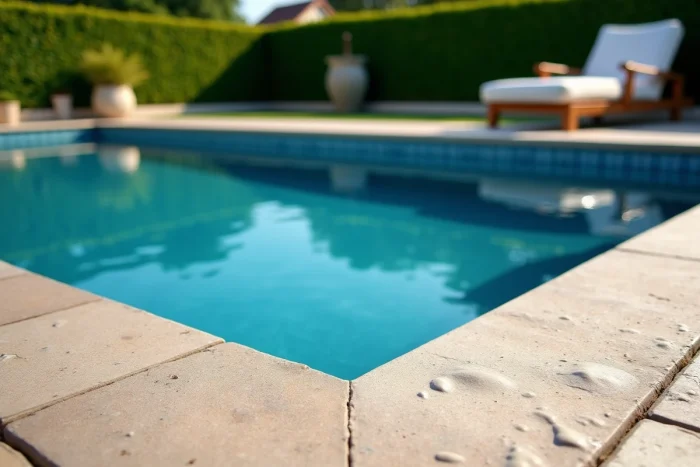
The color of a pool shell is not just a matter of taste. It alters the hue of the water, the perception of the pool’s depth, and the overall ambiance of your garden. Before settling on a color, several technical parameters deserve your attention, as this choice will commit you for many years.
Gelcoat and Water Color: The Optical Mechanism to Understand
You may have noticed that the same pool can appear turquoise in the morning and emerald green in the afternoon? This phenomenon is due to the gelcoat, the colored finishing layer that covers the polyester shell. Light passes through the water, reflects off the gelcoat, and then rises to the surface. It is the color of the gelcoat that determines the perceived hue of the water, not the water itself.
A white gelcoat gives light blue, almost crystalline water. A beige or sand gelcoat pulls the water towards jade green. A dark gray gelcoat produces a mirror effect, where the pool reflects the sky and surrounding vegetation.
The sunlight on your property amplifies or diminishes these effects. A dark blue shell installed in a garden very exposed to the south will appear more intense than an identical pool oriented north. If you want to choose the color of your pool shell wisely, keep in mind that the shade on a dry sample never exactly matches the result once the pool is filled.
Dark Pool Shell Color: Thermal Gain and Maintenance Constraints
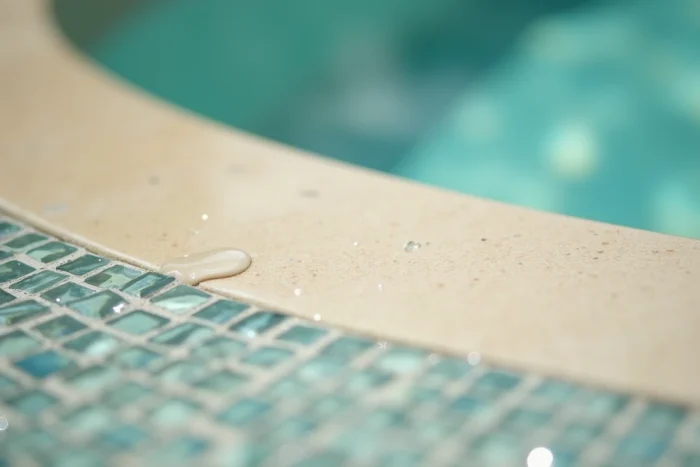
In recent years, dark shades (anthracite gray, midnight blue, black) have been gaining ground. Aesthetic appeal does not explain everything. Dark shells absorb more solar radiation, allowing for a slight natural increase in water temperature. In well-sunny regions, this passive thermal gain reduces the demand on a heat pump or auxiliary heating.
This benefit has a downside. Feedback from pool professionals indicates increased visibility of defects on very dark shells:
- Micro-scratches from the passage of a broom or robot appear more clearly than on a light gelcoat.
- Lime deposits form very contrasting white marks on an anthracite or black background.
- Residues from sunscreen or pollen leave a more visible greasy film at the waterline.
An intermediate shade like light gray or sand limits these inconveniences if you do not wish to intensify your maintenance routine. This is a point often overlooked in color catalogs.
Harmonizing the Pool Color with Architecture and Garden
Why do some pools seem perfectly integrated while others appear to be placed there by accident? The answer lies in the coherence of materials and surrounding shades.
Wood or Composite Decking
Natural wood (pine, ipe, cumaru) or brown composite decking creates a warm setting. A beige or sand gelcoat extends this warmth and gives water soothing green reflections. Conversely, a white shell on a dark wood deck can create too stark a contrast.
Stone or Gray Concrete Paving
Reconstituted stone or smooth concrete copings call for cooler shell colors. Light gray or slate blue naturally harmonizes with mineral materials. The result is a contemporary and uncluttered space.
Dense Vegetation and Natural Environment
If your garden is bordered by hedges, trees, or flower beds, the shell acts as a plant mirror. A green or dark gray gelcoat captures the reflections of greenery and blends the pool into the landscape. A white gelcoat, in this context, will stand out as an artificial element.

Warranty and Durability of Gelcoat: What Color Changes
A rarely discussed point concerns the link between shell color and warranty conditions. Some manufacturers impose stricter installation recommendations for the darkest shades. The reason is technical: a dark gelcoat heats more on the surface, which increases thermomechanical stresses on the polyester shell.
Before signing, check two elements with your installer:
- Is the warranty duration the same regardless of the chosen color, or are there exclusions for dark shades?
- Does the location of the pool (full south exposure, lack of shading) modify the coverage conditions?
- Does the manufacturer require the use of an insulating cover to maintain the warranty on certain colors?
These distinctions are not always included in commercial documentation. Asking the question upfront avoids unpleasant surprises if a gelcoat defect appears after a few seasons.
Pool Shell Color and Resale: An Underestimated Criterion
If you plan to sell your property in the medium term, the color of the pool weighs in on buyers’ perceptions. Neutral shades (white, light gray, sand) appeal to the majority and are unlikely to go out of style. A lagoon blue or Bali green may be appealing at the moment, but their strong character can be divisive.
Trendy colors follow a cycle. Anthracite gray, highly sought after in recent years, may seem less fresh in ten years, just as the bright blue of the 2000s eventually became tiresome. Choosing a versatile shade does not mean sacrificing elegance; it means betting on aesthetic longevity as much as technical durability.
The choice of a pool shell color rests on a balance between the visual rendering of the water, maintenance requirements, compatibility with your outdoor environment, and the manufacturer’s warranty conditions. Take the time to request a gelcoat sample submerged in water, ideally in full sunlight: this is the only reliable way to judge the final result.