
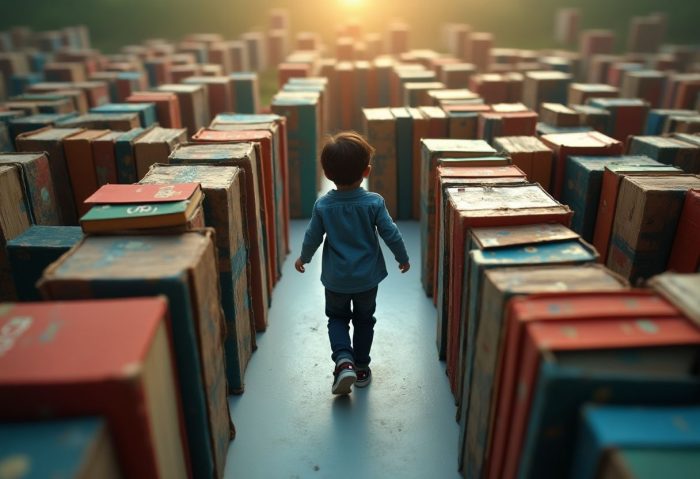
Imagine a world where every word on a page transforms into a titanic challenge, where every sentence seems to be an endless maze. This is the reality for many children with dyslexia or academic difficulties. These young individuals, often misunderstood and stigmatized, can easily lose confidence in themselves and become demotivated. In this context, access to appropriate educational resources becomes essential, not only for their education but also for their emotional well-being. It is crucial to explore the effectiveness of these educational tools and determine whether they truly meet the specific needs of these children. Are they really the keys that will allow these young people to unlock the doors of learning and personal growth?
Understanding the Specific Needs of Dyslexic Children
To accurately assess the suitability of educational resources, it is imperative to first understand the unique needs of dyslexic children.
Children with dyslexia often face difficulties with reading, writing, and sometimes oral language. These challenges are not merely a matter of delay but of fundamental differences in information processing. Thus, a one-size-fits-all pedagogical approach is insufficient. It is essential to have varied and personalized resources that adapt to each child, taking into account their unique way of perceiving and understanding the world. Traditional learning methods, often based on intensive reading and writing, do not always suffice. Here, multimedia tools can play a significant role, engaging various senses to facilitate knowledge assimilation.
Technological Resources: Advantages and Limitations
With the rise of technology, digital resources have multiplied, offering numerous opportunities for struggling children.
- Educational Apps: These interactive tools allow children to progress at their own pace in an engaging environment. With appealing interfaces and tailored exercises, they can overcome some traditional learning barriers.
- Specialized Software: Some software is designed specifically to meet the needs of dyslexic children. They offer features such as text-to-speech, font customization, and word spacing, thus facilitating reading.
- Potential Limitations: While technology offers fascinating possibilities, it also has its limitations. Unequal access to these tools can pose problems, as can their overuse, which could lead to technological dependency.
Reinvented Traditional Educational Material
Traditional educational resources have not lost their usefulness, but often require adaptation to be fully effective.
Books and workbooks designed specifically for dyslexic children can incorporate adapted fonts and layouts. Furthermore, practical exercises, such as a CM1 exercise, can be adjusted to provide appropriate challenges and encourage progress without causing frustration. Physical educational games, which promote learning through play and movement, are also an excellent resource for capturing children’s attention and allowing them to learn in a fun way. Encouraging a hands-on and tactile approach can often bring considerable benefits to struggling students.
The Role of Teachers and Parents in Utilizing Resources
The effectiveness of educational resources largely depends on their implementation, which requires the active involvement of teachers and parents.
Teachers play a pivotal role in identifying the specific needs of each child and adapting resources accordingly. Ongoing training on suitable tools and techniques is essential to enable them to make the most of the available resources. Moreover, parents are the natural allies of teachers. Their support at home, reinforcing learning and encouraging motivation, is equally vital. Constant dialogue between teachers and parents optimizes the use of resources and ensures coherent and harmonious support for the child.
Adapted educational resources, whether technological or traditional, offer immense potential to support dyslexic children and those facing academic difficulties. However, their success depends on a deep understanding of individual needs, as well as the active role of teachers and parents. When used effectively, these resources can transform the educational journey of these children, helping them develop not only academic skills but also the self-confidence essential for their future flourishing.