240 milliliters is what most American cups display, except when they go up to 250 depending on the brand’s mood. The French tablespoon holds to 15 milliliters, while the British one measures 17. Meanwhile, flour is measured by volume on the other side of the Atlantic, whereas in Europe, it’s the scale that decides.
Juggling standards and traditions adds a layer of uncertainty, even for those who think they have the right gesture.
- Multiply the uses, and unpleasant surprises are quick to follow: even seasoned chefs sometimes see their recipe fall short.
- A quick calculation between grams and ounces can throw everything off: sticky dough, too runny sauce, or dense cookies…
- Conversion charts and apps compete in interpretations: the numbers clash, and cooking gets lost in the figures.
Why conversions in cooking often lead to embarrassment
Ideally, everything should be measured to the millimeter. But the reality of the countertop is a battlefield of competing units. The clash between the metric system and Anglo-Saxon codes makes nothing simpler. When a recipe calls for 40 cl of milk, we know that everything depends on the substance, and confusion quickly creeps in: water, flour, sugar, or oil do not display the same weight upon conversion. The result is a flat dessert or a sauce that misses the mark.
Some rely on tips picked up here and there, while others hastily scribble a chart without checking its reliability. Volume or weight, a decision must be made, but mixing genres makes the exercise tricky. To avoid mistakes, there are useful resources, like this link that accurately details the conversion: 40 cl in grams.
To better understand common methods and what they imply, here’s an overview:
- Volume units (cL, mL) are mainly suitable for liquids but become tricky with dry ingredients, whose density affects the actual weight.
- Weighing in grams remains safer, provided you use an accurate scale and do not rely on rough conversions.
Switching from one system to another is never just a simple multiplication: you must consider the uniqueness of each ingredient. For baking, it’s clear-cut: the slightest error alters texture, taste, and final result. Variations do not disappear with experience, in a world filled with unwritten exceptions. We aim for simplicity, yet end up complicating things.
Concrete tips for successful conversions and aiming accurately
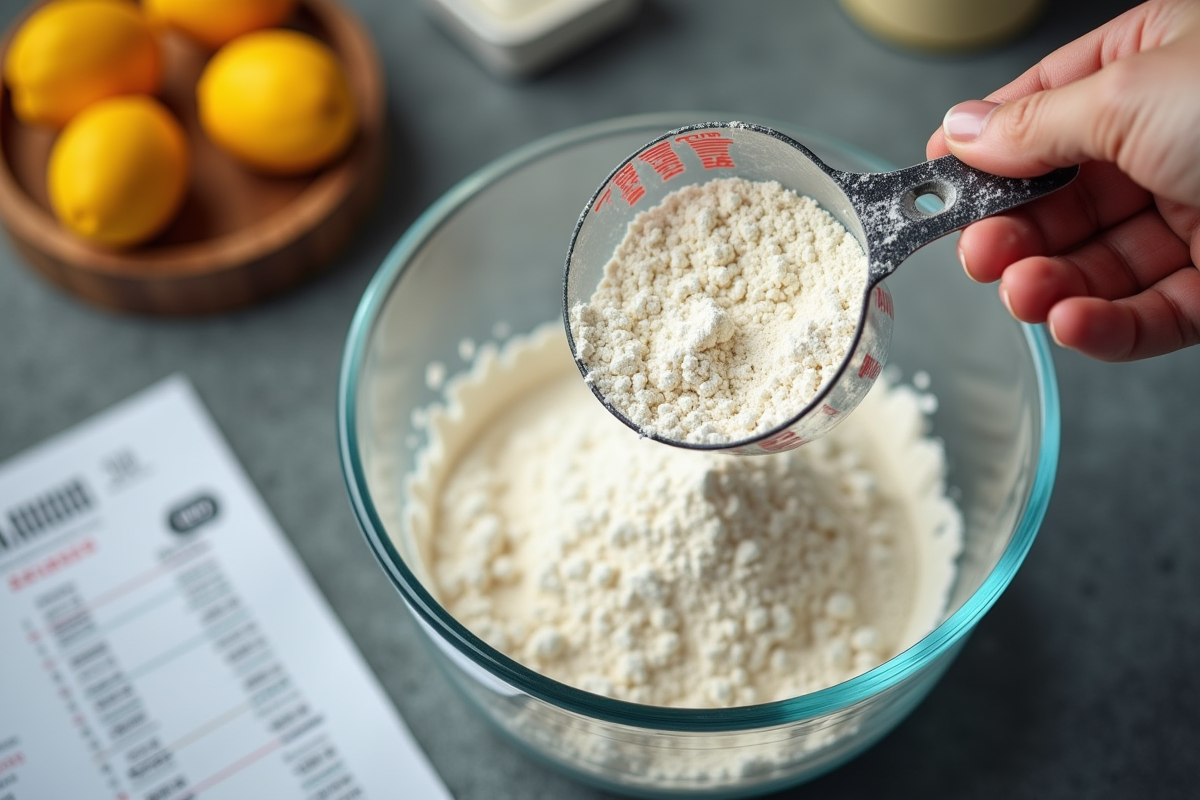
To limit inaccuracies, it’s better to surround yourself with reliable tools and proven reflexes. Equipping yourself with a well-calibrated measuring cup allows for measuring liquids without going off track. Displaying a solid chart in the kitchen reassures whenever the question of grams or centiliters arises again, especially for the most precise recipes.
Here are some practical tools that make daily tasks easier:
- The digital scale measures to the nearest gram, a decisive advantage for successful baking or any demanding preparation.
- Measuring spoons bring consistency in small measures: 15 ml for the large one, 5 ml for the small one, provided you choose a readable and reliable set.
Taking a ready-made equivalence at face value risks distorting your recipe. A conversion chart specific to each ingredient remains the best ally, as 1 centiliter of water does not equal 1 centiliter of flour; the difference is evident as soon as you weigh them. For accurate conversions, it’s better to check the exact correspondence based on what you are cooking.
While mobile apps can be helpful as a last resort, nothing replaces a precise timeline and a chart designed around the reality of the products. This is the guarantee of achieving the right consistency and all the nuances of a successful dish.
Ultimately, when faced with an unusual measurement, it is the attentive eye and the right tool that transform the recipe. Combine the accuracy of weight with an understanding of the materials: the flavor benefits, the texture improves, and cooking regains its meaning.